
How much does a 2200-degree vacuum sintering furnace cost
From high-temperature sintering to precision chip manufacturing: The industrial revolution and cost truth behind the 2200℃ vacuum furnace
The "Invisible Hero" of Vacuum Furnaces: Heating up the Future for Industries such as Semiconductors, Materials, and Energy
Imagine a device capable of heating materials to 2200℃ in a vacuum environment. This device not only allows metals to maintain a stable structure at extremely high temperatures but also precisely controls processes such as oxidation, alloying, or sintering. In the semiconductor industry, this device is known as a "sintering furnace," while in materials science, it is referred to as a "high-temperature vacuum processing equipment." It is not a mere "oven," but rather a "wonder tool" in industrial production, capable of determining the performance, quality, and cost-effectiveness of products.
For enterprises, purchasing such a device involves not only technology selection but also considerations of cost, performance, reliability, and long-term maintenance costs. Today, we will discuss the price, application scenarios, technical advantages, and future development trends of the 2200℃ vacuum furnace, to help you gain a clearer understanding of the true features of this high-end equipment.
The "Evolution of Vacuum Furnaces": From Laboratory to Large-Scale Industrial Application
The development of vacuum furnaces did not occur overnight; it underwent a lengthy process from laboratory research to industrial application. In the mid-20th century, with the rise of the semiconductor industry, the demand for high-purity and high-performance materials grew increasingly. Traditional high-temperature furnaces, such as resistance furnaces, were unable to meet the needs for precise sintering under vacuum conditions, thus vacuum furnaces were gradually introduced.
With the continuous advancement of technology, the structure, materials, and control systems of vacuum furnaces are also undergoing continuous optimization. For instance, more efficient vacuum pump systems, higher temperature-resistant furnace lining materials, and intelligent temperature control systems have been adopted. These improvements enable vacuum furnaces to not only operate at higher temperatures but also more precisely control the sintering process, thereby enhancing product quality and consistency.
In today's industrial environment, vacuum furnaces have been widely used in fields such as semiconductors, electronic materials, energy storage, aerospace, and more. For instance, in semiconductor manufacturing, vacuum furnaces are utilized for sintering metal-oxide-semiconductor field-effect transistors (MOSFETs) or other crucial steps of high-performance devices. In the energy sector, they are employed to prepare cathode materials for lithium-ion batteries, enhancing battery capacity and stability.
Core application scenario of 2200℃ vacuum furnace: "heating" high-end materials for the future
The core application scenarios of 2200℃ vacuum furnaces are primarily concentrated in the following areas:
1. Semiconductor and electronic devices
In the semiconductor industry, 2200℃ vacuum furnaces are primarily utilized for sintering metal oxide semiconductors (such as aluminum oxide, zinc oxide, etc.) or other high-temperature alloying processes. For instance, during the fabrication of high-performance electronic devices, metal layers must be heated to 2200℃ under vacuum conditions to establish a stable structure, thereby enhancing the conductivity and stability of the device. This high-temperature sintering process not only eliminates impurities but also refines the microstructure of the material, ultimately boosting the device's performance.
2. Energy materials and battery manufacturing
With the development of electric vehicles and energy storage technology, the demand for high-performance battery materials is growing. A 2200℃ vacuum furnace plays a crucial role in the preparation of cathode materials for lithium-ion batteries, such as lithium iron phosphate. By heating under vacuum conditions, the crystal structure of the material can be precisely controlled, enhancing the battery's capacity and cycle life. When preparing electrode materials for solid oxide fuel cells (SOFC), a vacuum furnace also provides the necessary environment to ensure high purity and stability of the materials.
3. Aerospace and high-end materials
In the aerospace industry, the preparation of high-end materials such as high-temperature alloys and ceramic composites is inseparable from vacuum furnaces. For instance, when manufacturing blades or turbine disks for aviation engines, metal materials need to undergo sintering or alloying processes in a vacuum environment at 2200℃ to enhance their high-temperature resistance and oxidation resistance. This high-temperature treatment process can significantly improve the mechanical properties of the materials and extend the service life of the equipment.
4. Advanced ceramics and functional materials
In the field of advanced ceramics and functional materials, 2200℃ vacuum furnaces are utilized for the preparation of high-performance ceramic devices, such as optical windows, thermoelectric materials, or magnetic materials. By heating under vacuum conditions, ceramic materials with high density and uniform structure can be formed, enhancing their mechanical strength and thermal stability. For instance, when preparing optical ceramics, vacuum furnaces are capable of removing gaseous impurities, ensuring transparency and optical performance.
Price of 2200℃ vacuum furnace: market pricing and cost factors
For enterprises, the price is a crucial factor when purchasing a 2200℃ vacuum furnace. The price range in the market typically varies from several million to tens of millions of yuan, depending on the following aspects:
1. Furnace type and specification
Different furnace types and specifications correspond to different prices. For example, a small laboratory furnace may cost around several million yuan, while a large industrial furnace (such as continuous or batch type) may require tens of millions of yuan. The size of the furnace body, the size of the heating area, and whether it supports multiple temperature gradients also affect the price.
2. Materials and Structures
The price of a vacuum furnace is also closely related to its materials and structure. For example, furnace linings made of high-performance ceramics or metal materials can improve the high-temperature resistance and stability of the furnace body, but the cost will also increase accordingly. The sealing performance of the furnace body, the efficiency of the vacuum pump, and the level of intelligence of the control system also affect the price.
3. Manufacturer and technological level
Different manufacturers vary in terms of technological level, research and development capabilities, and service support. Some well-known manufacturers may offer higher cost-effectiveness, or provide longer warranty periods and technical support. For example, some enterprises with years of industry experience are able to offer more mature products and superior services.
4. Market demand and supply
During periods of robust market demand, prices may rise; whereas during periods of ample supply, prices may decline. Tax policies or import tariffs in certain regions can also impact prices. Hence, when making purchases, enterprises need to comprehensively consider these factors and select the most suitable products and suppliers.
Technical advantages of vacuum furnaces: providing "precise heating" for high-temperature processing
Compared to traditional high-temperature furnaces, vacuum furnaces possess the following core advantages in high-temperature processing:
1. Precise temperature control
Vacuum furnaces can precisely control temperature at extremely high levels, avoiding the oxidation or contamination issues that traditional furnaces encounter at elevated temperatures. Through an intelligent control system, fine adjustments to temperature can be made, ensuring stability and consistency during the sintering process.
2. Remove impurities and enhance purity
In a vacuum environment, a vacuum furnace can effectively remove gaseous impurities from materials, thereby enhancing their purity. This is crucial for the preparation of semiconductors, electronic materials, and energy materials, as impurities may affect the performance and lifespan of these materials.
3. Avoid oxidation and maintain material properties
At high temperatures, materials are prone to oxidation or other chemical reactions, which can affect their performance. Vacuum furnaces can avoid these issues by providing a vacuum environment, ensuring that materials maintain stable structure and performance at high temperatures.
4. Versatility and flexibility
Vacuum furnaces can be used not only for sintering but also for various processes such as alloying, annealing, and heat treatment. This makes them widely applicable in different industrial fields and capable of meeting various production needs.
Future Outlook: The Role of Vacuum Furnaces in Industry 4.0
1. Automation and intelligence
With the development of Internet of Things (IoT) and Artificial Intelligence (AI) technologies, the automation and intelligence levels of vacuum furnaces will continue to improve. Future vacuum furnaces may be equipped with more sensors and control systems to achieve real-time monitoring and automatic adjustments, thereby enhancing production efficiency and quality.
2. Green and sustainable development
In the context of sustainable development, the manufacturing and use of vacuum furnaces will also place greater emphasis on environmental protection. For instance, adopting more environmentally friendly materials, reducing energy consumption, and recycling waste materials are all directions for future development.
3. Miniaturization and modularization
With the continuous advancement of technology, the miniaturization and modularization of vacuum furnaces are also improving. In the future, smaller, lighter, and more portable vacuum furnaces may emerge, suitable for different application scenarios.
4. Integration with other technologies
Vacuum furnaces will be more closely integrated with other advanced technologies (such as lasers, plasma, 3D printing, etc.) to form more efficient production processes. For example, by combining laser heating technology, more precise heat treatment can be achieved, enhancing the performance of materials.
Conclusion: Choosing the right vacuum furnace can pave the way for future industrial development
The 2200℃ vacuum furnace is a crucial equipment in industrial production. It not only meets the needs of high-temperature sintering but also enhances the performance and quality of materials. When purchasing, enterprises need to comprehensively consider factors such as price, technical advantages, application scenarios, and future development trends to select the most suitable product and supplier.
With the continuous advancement of technology, vacuum furnaces will play a greater role in Industry 4.0, providing more precise and efficient solutions for the preparation of high-end materials. Therefore, when selecting vacuum furnaces, enterprises need to consider not only current performance and cost, but also long-term development potential and technical support. Through reasonable selection and application, vacuum furnaces will safeguard the future industrial development.

Can a vacuum sintering furnace sinter silicon carbide ceramics
Why has silicon carbide (SiC) ceramics gained popularity in the semiconductor industry? In recent years, with the rapid advancement of semiconductor technology, the demands for materials in chip manufacturing have been continuously increasing. Traditional ceramic materials often fail to meet extreme requirements in high-temperature, high-pressure, and high-purity environments. Silicon carbide (SiC), as a material possessing high hardness, high thermal conductivity, and excellent electrical insulation properties, has gradually become an ideal choice for semiconductor devices, electronic components, and high-end energy equipment. The sintering process of silicon carbide ceramics is not a simple heating process, but requires precise control of temperature, pressure, and atmosphere. Here, the vacuum sintering furnace acts like a magic factory, providing a scientific basis for the molding of silicon carbide ceramics.
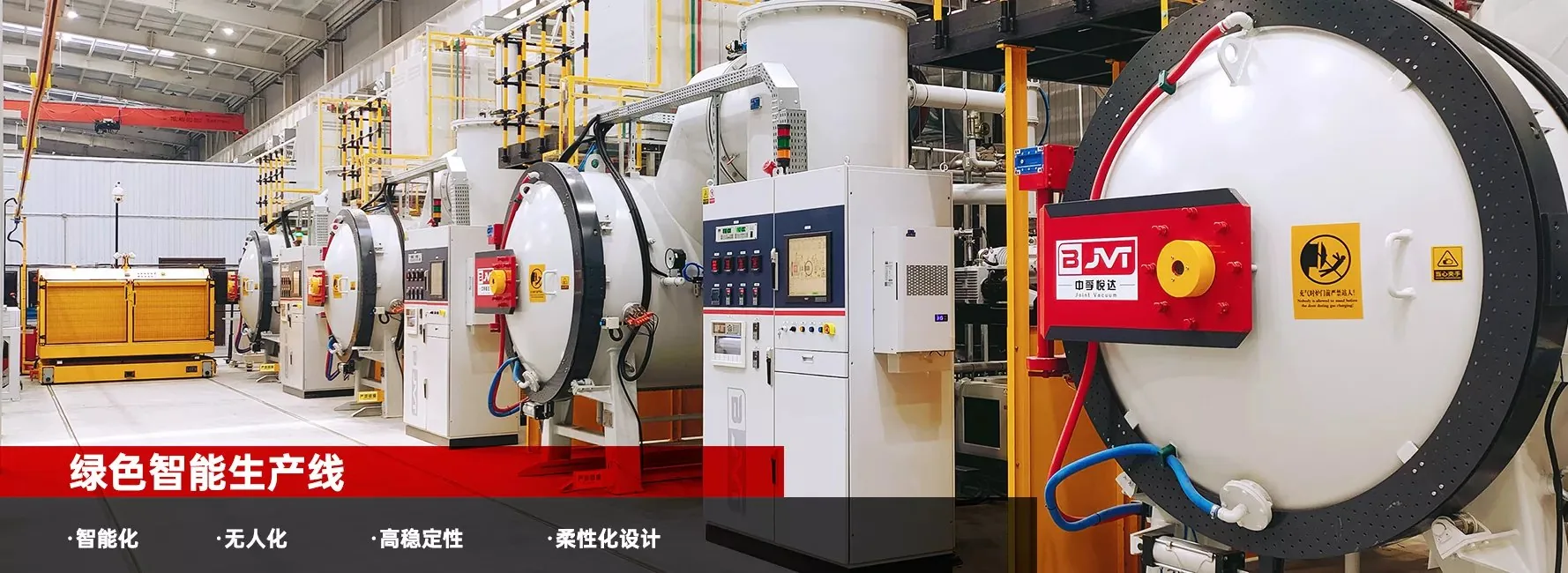
Greener smart production line: automatic loading and remote service
Automated, unattended, stable and flexible — lower cost per part for our customers.