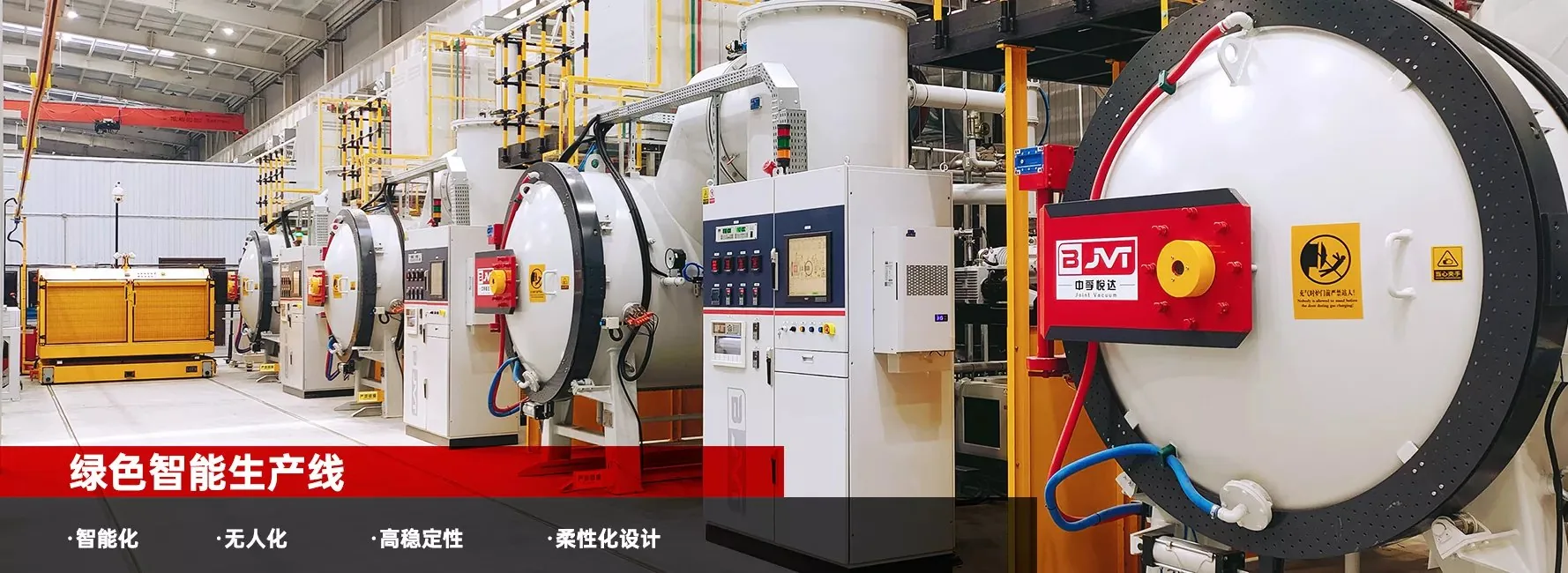
Can a vacuum sintering furnace sinter silicon carbide ceramics
The secret weapon of vacuum sintering furnaces: why can they solve the sintering challenges of silicon carbide? Traditional sintering methods, such as pressure sintering and hot pressing sintering, often face the following challenges in the production of silicon carbide ceramics: Difficult atmosphere control: Silicon carbide is highly reactive with oxygen at high temperatures, leading to oxidation or pore formation. Vacuum sintering, by completely eliminating air, avoids the risk of oxidation and ensures material purity. Precision of temperature gradient: The sintering temperature of silicon carbide is usually above 1400°C, and any temperature fluctuation can affect the grain structure, leading to performance degradation. The uniform heating system of a vacuum furnace can achieve minimal temperature fluctuations, ensuring consistency. Balance between density and strength: Silicon carbide needs to achieve high density during the sintering process, but excessive pressure may lead to excessively large grains, reducing the toughness of the material. Vacuum sintering finds the optimal point by controlling pressure and time, making the material both dense and tough. The core advantages of vacuum sintering furnaces lie in independent atmosphere control and uniform temperature field, which are particularly crucial in the sintering of silicon carbide ceramics. For example, some high-end vacuum furnaces adopt multi-zone temperature control systems, which can achieve different temperature gradients in different zones to meet the sintering requirements of complex ceramic structures.

The application of vacuum sintering furnaces in silicon carbide ceramics
In the semiconductor industry, silicon carbide ceramics are commonly used to manufacture substrates or heat sinks for high-voltage semiconductor devices such as IGBTs and MOSFETs. Vacuum sintering furnaces play the role of precision machinists here: high purity requirements: silicon carbide is highly susceptible to absorbing impurities at high temperatures, while a vacuum environment can effectively remove gaseous impurities, ensuring the electrical insulation properties of the material. Microstructure optimization: by controlling sintering parameters, the grain size of silicon carbide can be adjusted, enhancing its mechanical strength and thermal conductivity. For example, some vacuum furnaces are equipped with microwave-assisted systems that can accelerate the sintering process and reduce energy consumption.
In the field of power electronics, silicon carbide ceramics at the energy and electronic component level are widely used in high-end products such as frequency converters and electric vehicle battery modules. The advantages of vacuum sintering furnaces are reflected in the following aspects: High-temperature stability: Silicon carbide can maintain its stability in high-temperature environments above 1500°C, and the long-term stable operation of vacuum furnaces ensures the long-term reliability of products. Composite material sintering: Some silicon carbide ceramics need to be compounded with other materials (such as metals or ceramics), and vacuum sintering furnaces can complete the sintering of multiple materials in the same furnace run, improving production efficiency.
Industrial and aerospace-grade silicon carbide ceramics In the aerospace field, silicon carbide ceramics are used as high-temperature wear-resistant components (such as engine blades and heat shield materials). The application scenarios of vacuum sintering furnaces include: ultra-high temperature sintering: some vacuum furnaces support sintering temperatures above 1800°C, meeting the aerospace industry's demand for material extreme performance. Tightness requirements: aerospace products have extremely high requirements for tightness, and vacuum sintering furnaces avoid the formation of pores in materials at high temperatures by completely excluding air, thus improving the sealing performance of products.
The hidden advantages of vacuum sintering furnaces: From cost to sustainable energy efficiency improvement: Compared to traditional furnaces, vacuum sintering furnaces reduce energy waste through precise control of temperature and time. For example, some high-end vacuum furnaces utilize waste heat recovery systems to recycle the heat from high-temperature exhaust, significantly reducing energy consumption. Improved product consistency: The stability of vacuum furnaces can reduce human operational errors and ensure consistent performance across each batch of silicon carbide ceramics. For high-end electronic products, this means fewer reworks and higher market competitiveness. Environmental protection and sustainable development: Vacuum sintering furnaces emit minimal gases during production, meeting the requirements of green manufacturing. With increasingly stringent environmental regulations, this low-carbon production model will become an inevitable choice for future industrial upgrading.
Future: The Co-growth of Vacuum Sintering Furnaces and Silicon Carbide Ceramics With the trend of quantization in semiconductor technology, the application scenarios of silicon carbide ceramics will further expand, and vacuum sintering furnaces will also undergo more upgrades: Intelligentization and Automation: Future vacuum furnaces will become more intelligent, predicting sintering parameters through AI algorithms to achieve automated production without human intervention. This means that the sintering process of silicon carbide ceramics will be more efficient and precise. Expansion of Material Diversity: As the application of silicon carbide ceramics in new energy, aerospace, and other fields continues to deepen, vacuum sintering furnaces may support more complex material combinations, such as silicon carbide-based composites or nano-silicon carbide ceramics. New Standard for Green Manufacturing: With the continuous upgrading of environmental regulations, vacuum sintering furnaces will become a standard equipment for green manufacturing. In the future, enterprises may pay more attention to the energy efficiency and environmental performance when selecting sintering equipment.
Summary: The combination of vacuum sintering furnaces and silicon carbide ceramics. In the sintering process of silicon carbide ceramics, a vacuum sintering furnace is not merely a simple heating tool, but rather a precise scientific system. Through atmosphere control, temperature uniformity, and high-precision parameter adjustment, it provides strong support for the high-performance production of silicon carbide ceramics. In the fields of semiconductors, energy, and aerospace, the application of silicon carbide ceramics is driving industrial upgrading, and vacuum sintering furnaces are a crucial link in this process.
For enterprises engaged in the production of silicon carbide ceramics, choosing a vacuum sintering furnace with stable performance, convenient operation, and excellent energy efficiency can not only enhance product quality but also reduce production costs and achieve sustainable development. In the future, with the continuous advancement of technology, the integration of vacuum sintering furnaces and silicon carbide ceramics will become more profound, injecting new vitality into industrial manufacturing.